.svg)



Ancient Artefacts, Ancient Futures
2017
MArch Architecture: Preliminary Research Project (Year 4)
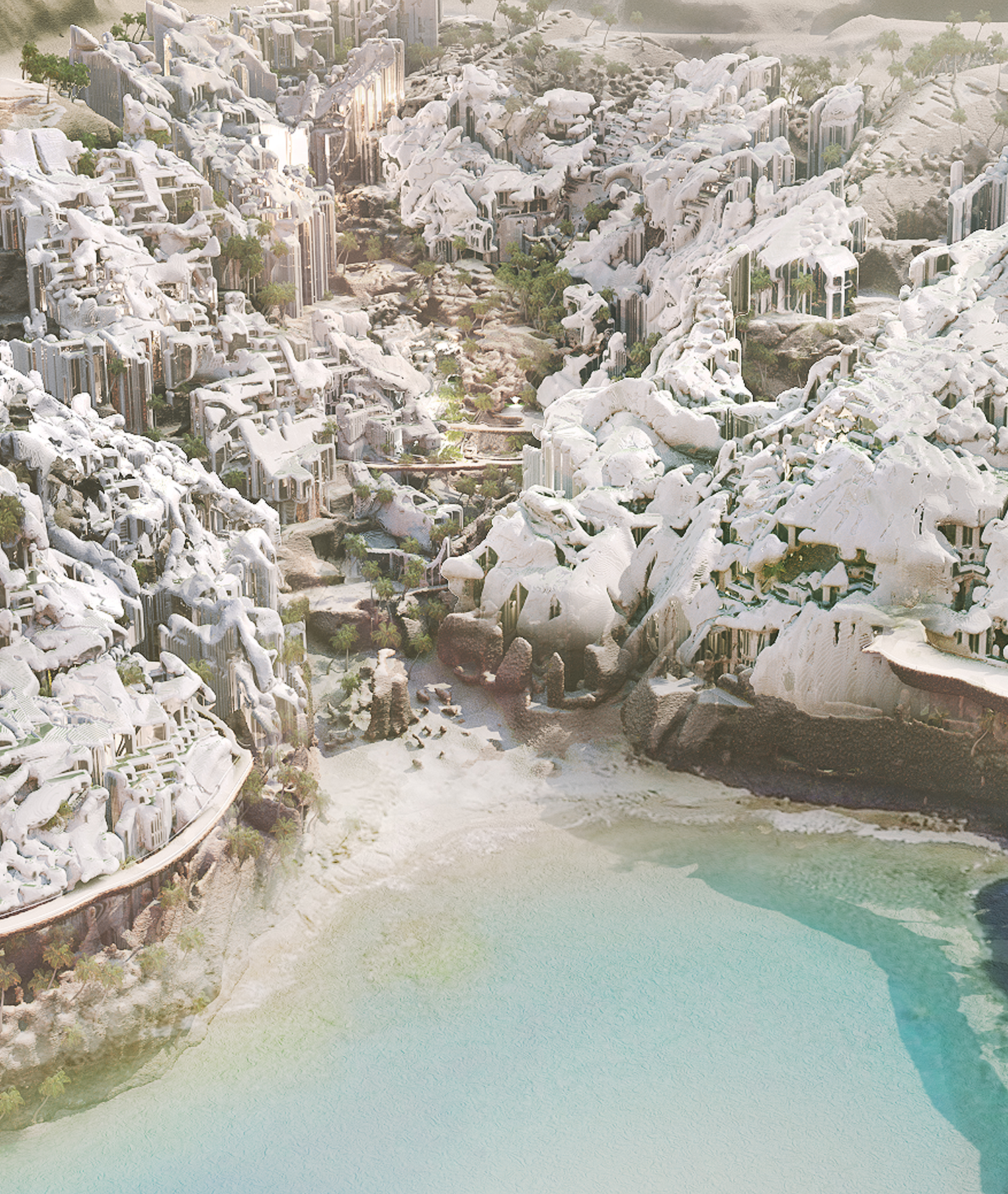
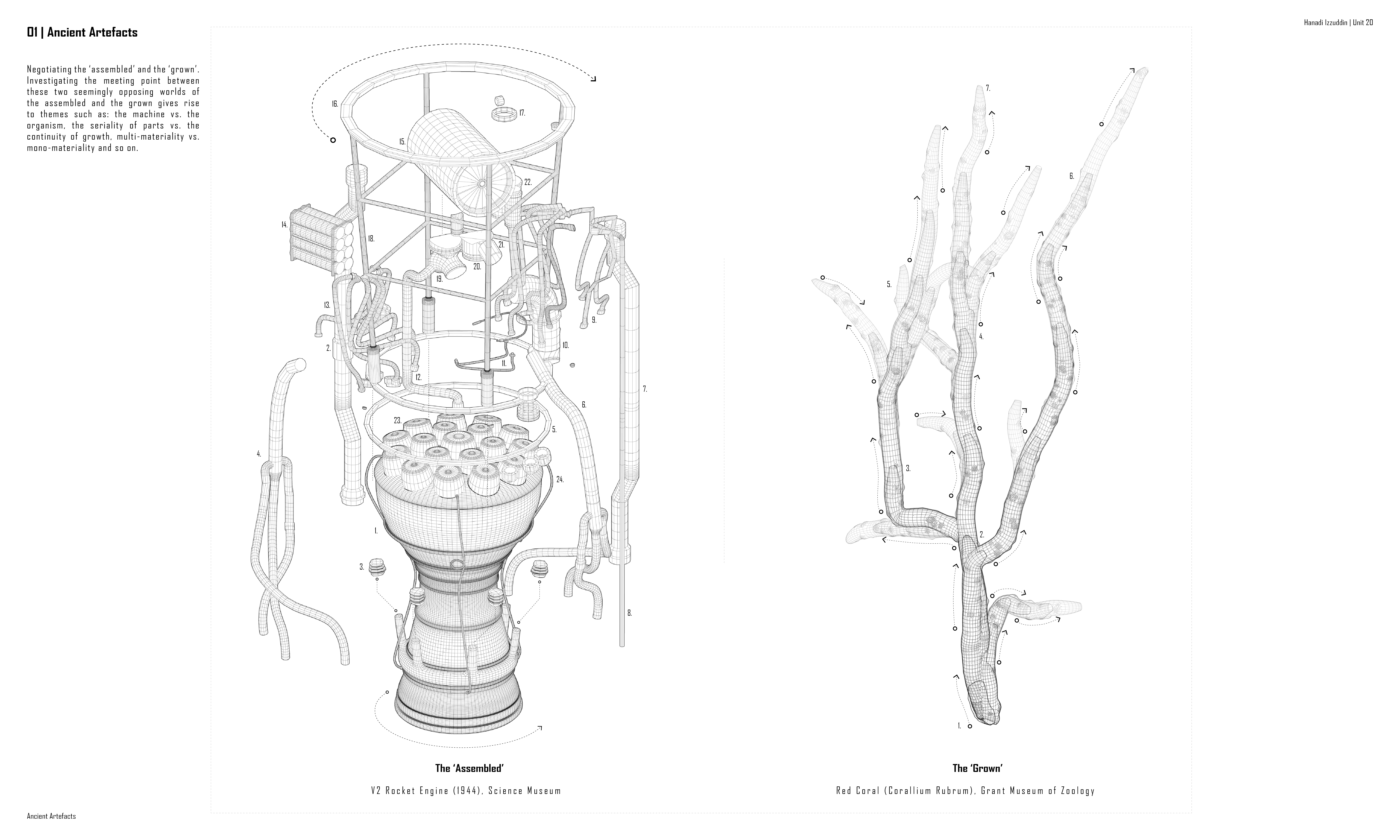
Here, I explore the intersections of a bio-mechanical condition through negotiating the ‘assembled’ (V2 Rocket Engine, 1944) and the ‘grown’ (Red Coral, Corallium Rubrum). Investigating the meeting point between these two seemingly opposing worlds gives rise to themes that I later explore in a building proposal, including: the machine vs. the organism, the seriality of parts vs. the continuity of growth, multi-materiality vs mono-materiality and so on.
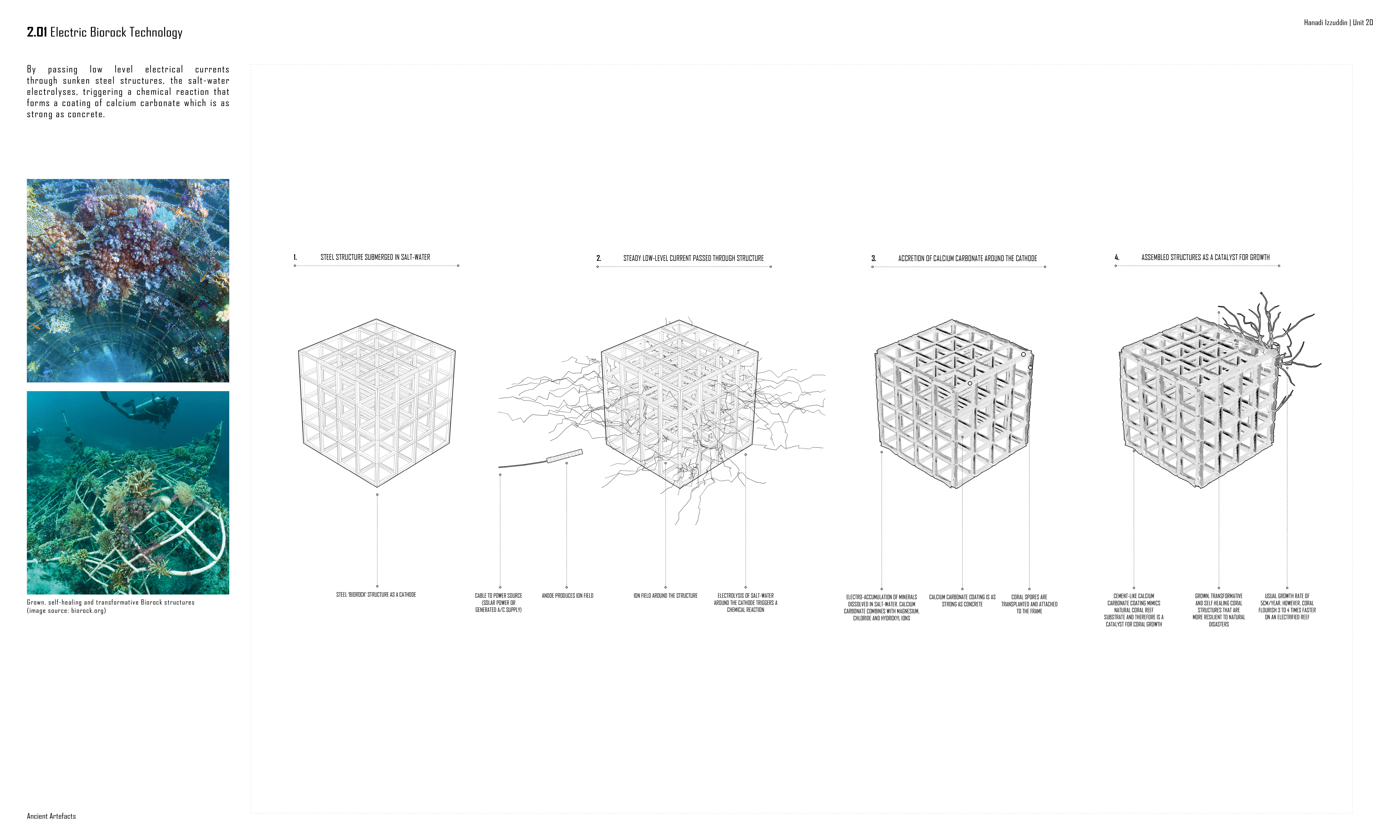
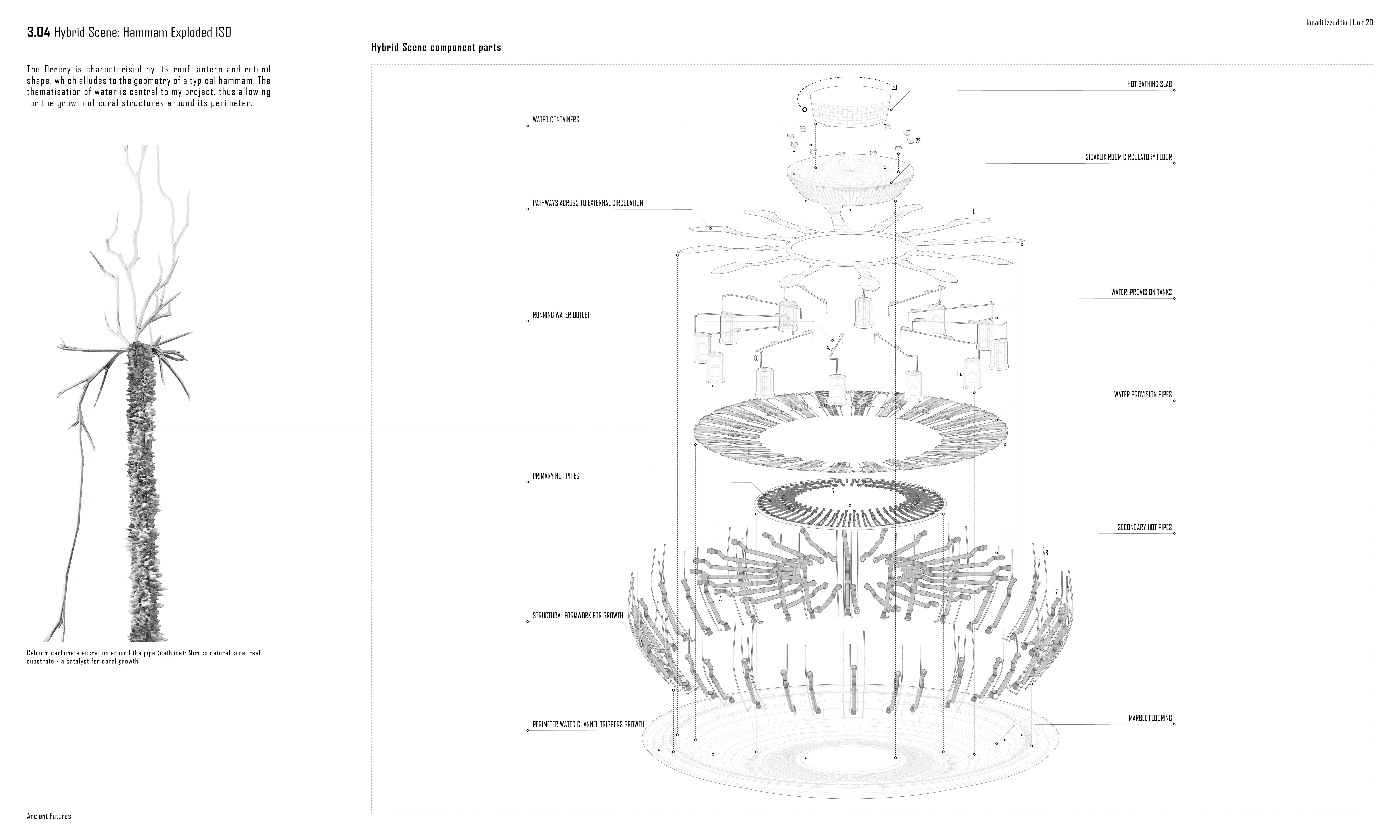
A hybrid architectural language begins to emerge through an exploration of Electric Biorock Technology, whereby low level electrical currents are passed through sunken steel structures to electrolyse the surrounding salt-water, triggering a chemical reaction that forms a coating of calcium carbonate. Reported to be as strong as concrete, this coating is not only a catalyst for coral growth, but also becomes a connection point between 'grown' and 'assembled' worlds.
View the full project presentation and related commentary as part of the building proposal here.
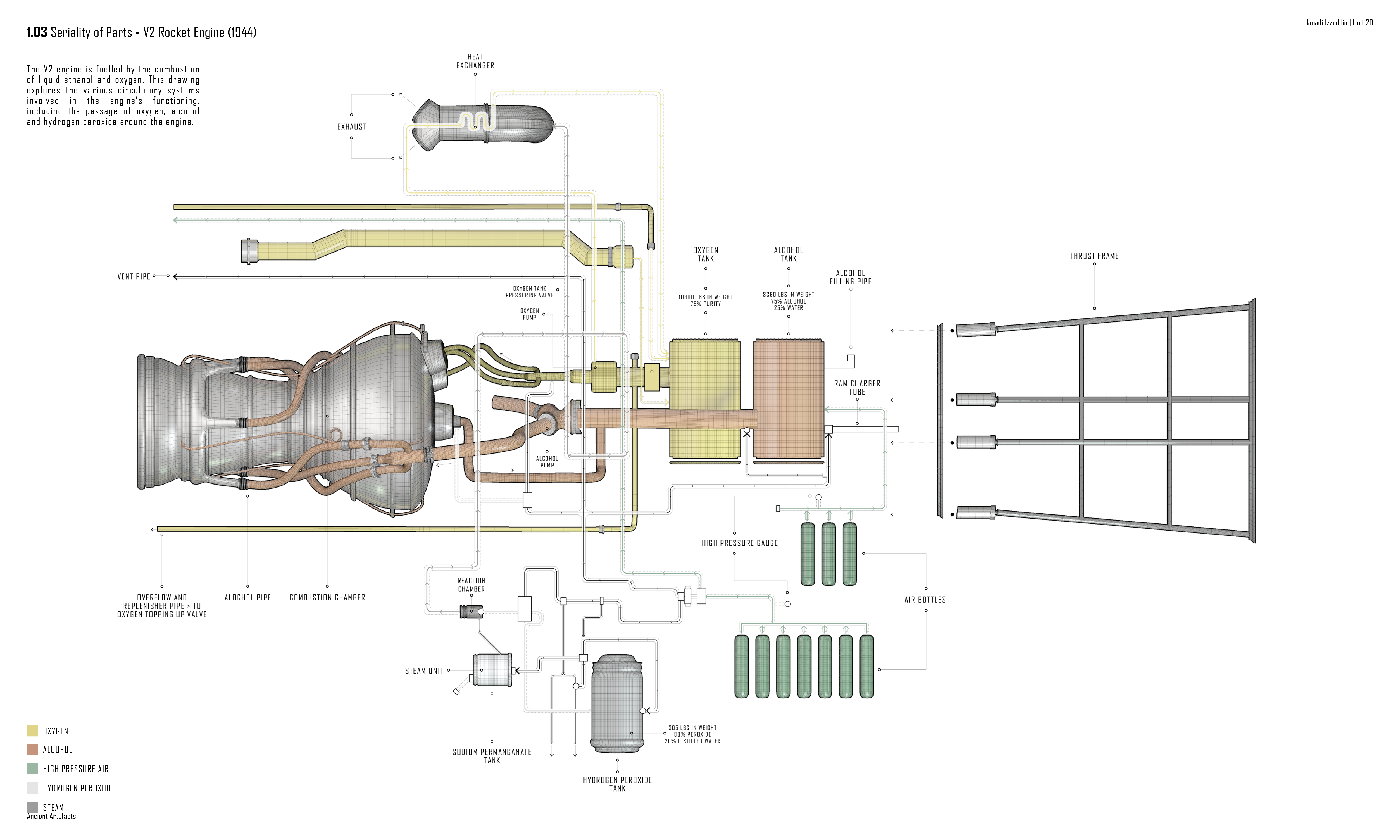
V2 Rocket Engine (1944), Science Museum
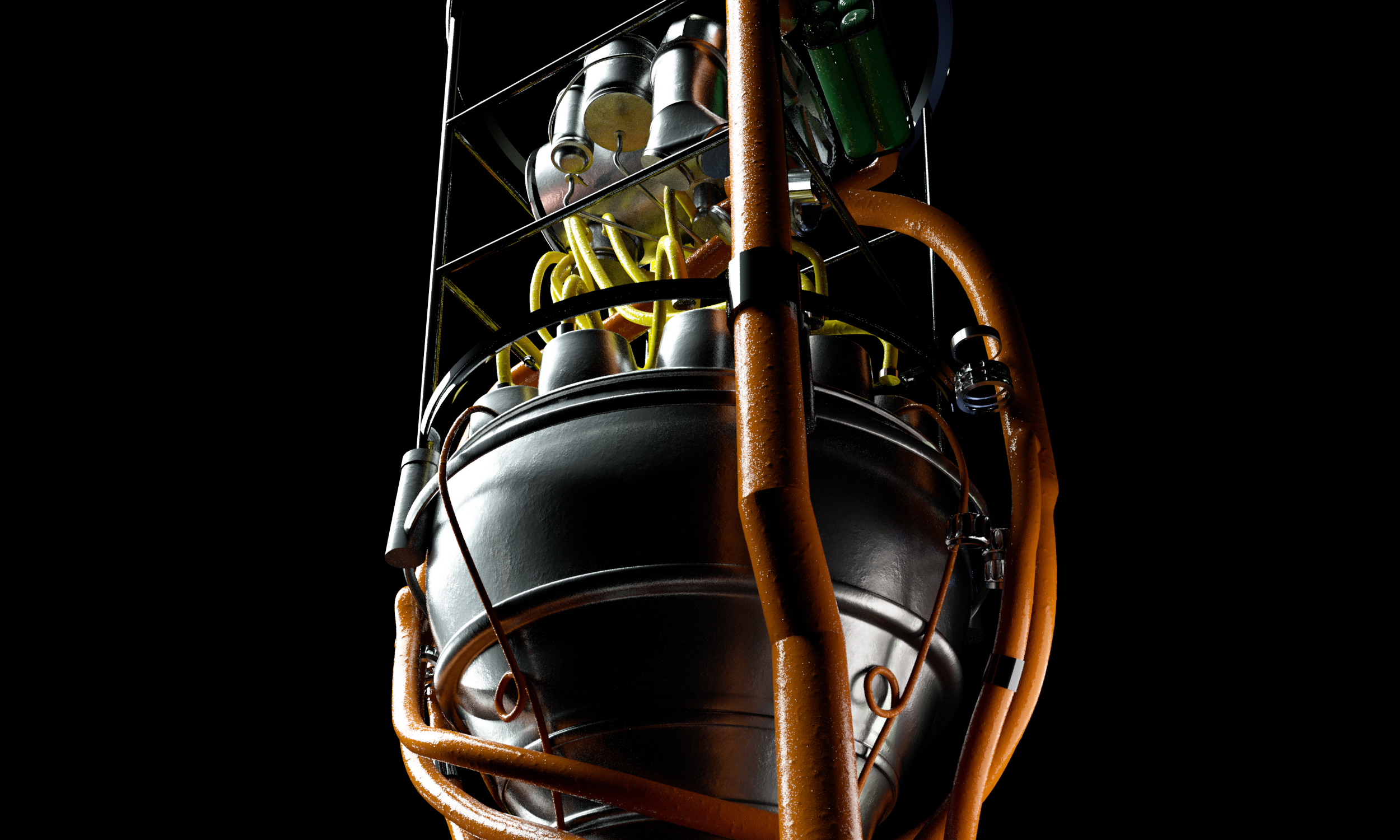
The aim here was to begin to understand the intrinsic logic of a mechanical artefact, whilst simultaneously furthering my proficiency in polygonal mesh modelling. Found in London’s Science Museum, The V2 Rocket engine is comprised of several unique parts that are activated in succession and thus must function perfectly with no margin for error. I began drawing the engine in terms of its schematics, understanding the various circulatory systems involved in its functioning. Fascinated by the multi-materiality of its parts, the digital construction of the engine is achieved through polygonal mesh modelling and texturing, where reality becomes a technological aim to showcase its roughly-painted pipework and the combustion chamber’s smooth steel materiality.
Red Coral (Corallium Rubrum), Grant Museum of Zoology
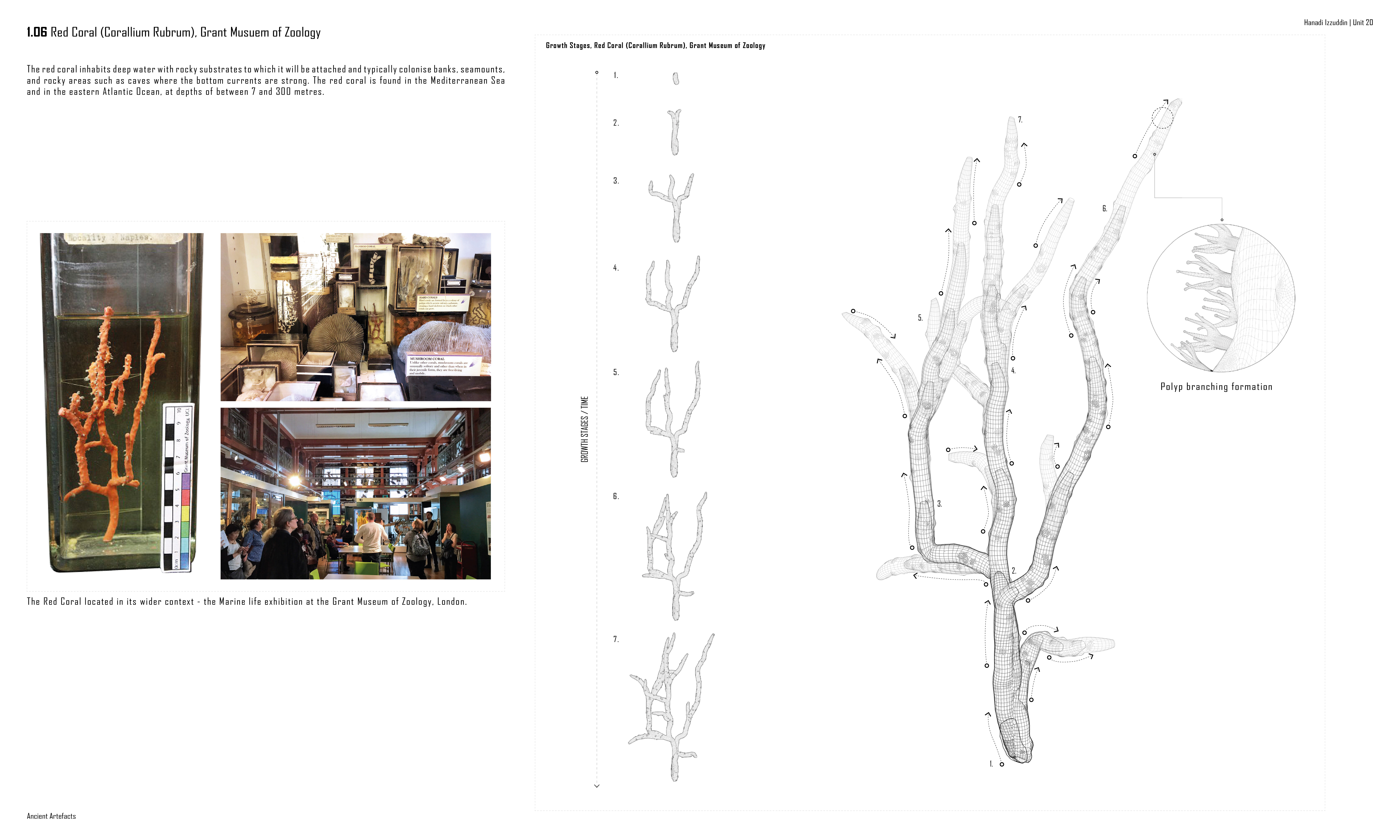
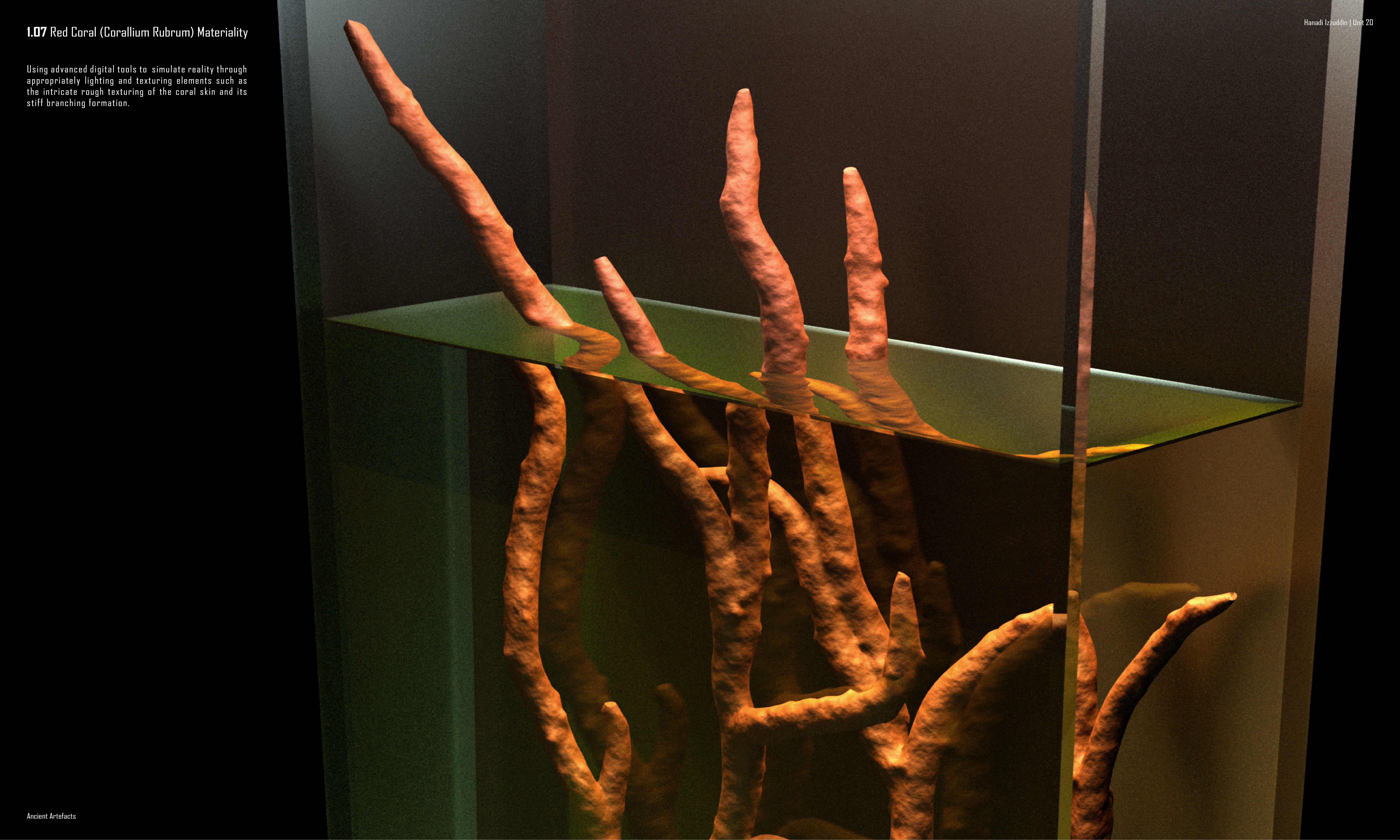
The aim here was to begin to understand the intrinsic logic a grown artefact, whilst simultaneously furthering my proficiency in procedural modelling. Typically found in the Mediterranean Sea, between 7 and 300 metres deep the coral collectively forms a tall, branching, tree-like structure that can reach metres in height. I gained interest in the mono-materiality of the coral articulated through the rough texturing of the coral skin, and its stiff branching formation which I replicated in Houdini FX.
Hybrid Artefact: Rocket Landing Pad
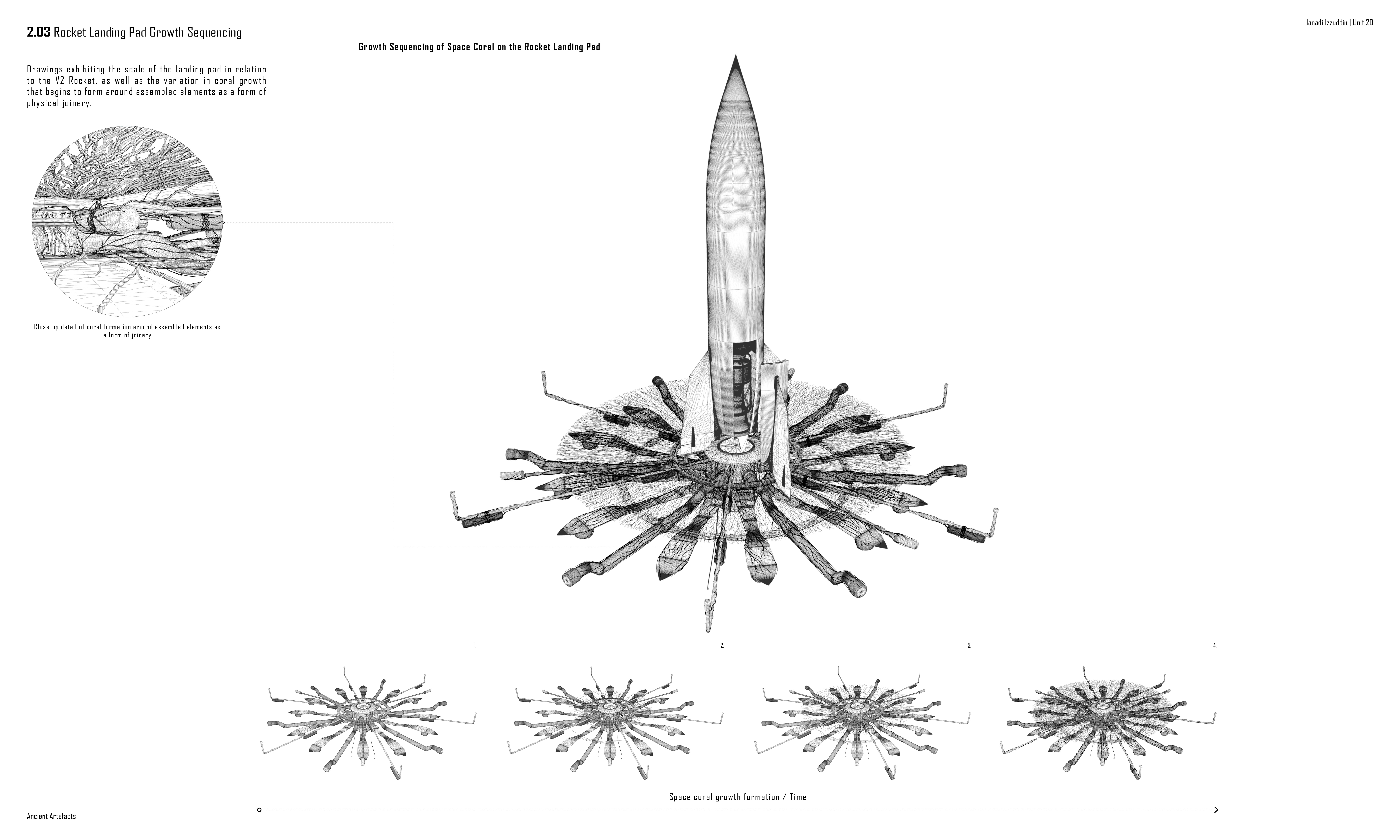
In hybridising the two artefacts of the engine and the coral, a hybrid object emerges - a Rocket landing pad. This landing pad investigates the notion of growing structures in outer space. I speculate that if a rocket landed on water on another planet, bringing with it coral spores from earth, how could it reconfigure itself into a new architecture that becomes a catalyst for growth to accommodate for the landing of future rockets? By implanting coral spores within the structural core ring of the landing pad, a radial configuration of its biological components might be achieved.
Hybrid Scene: Prometheus (2012), The Orrery
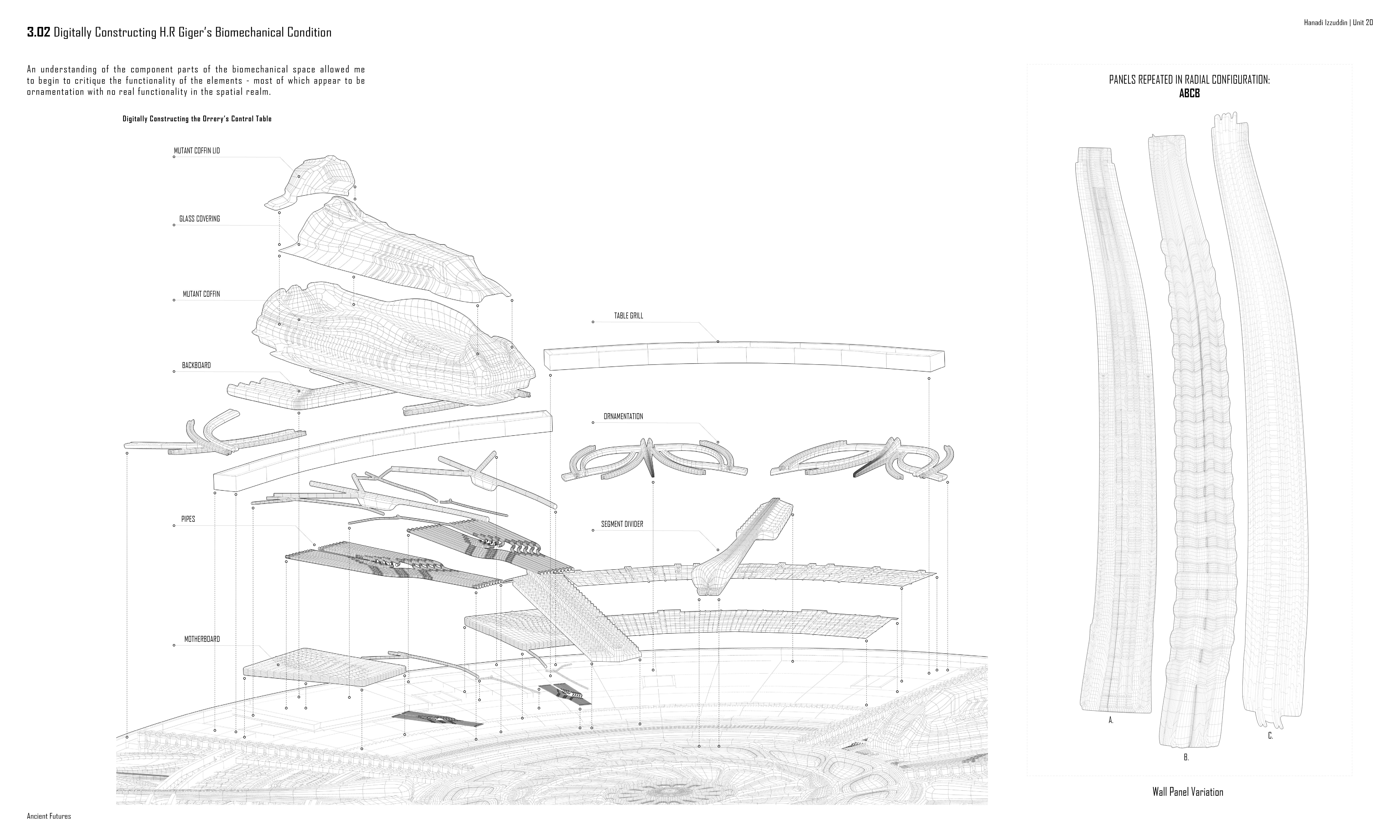
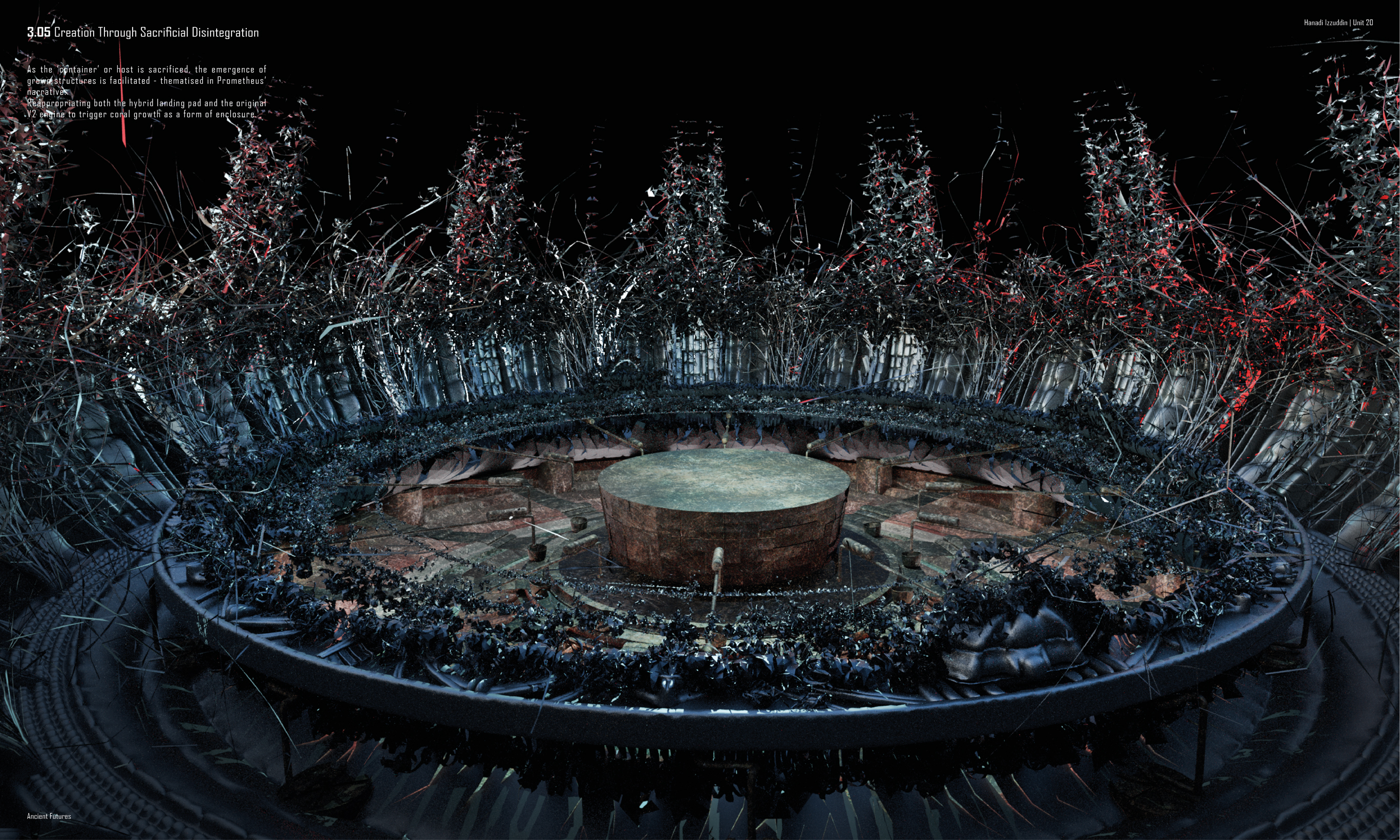
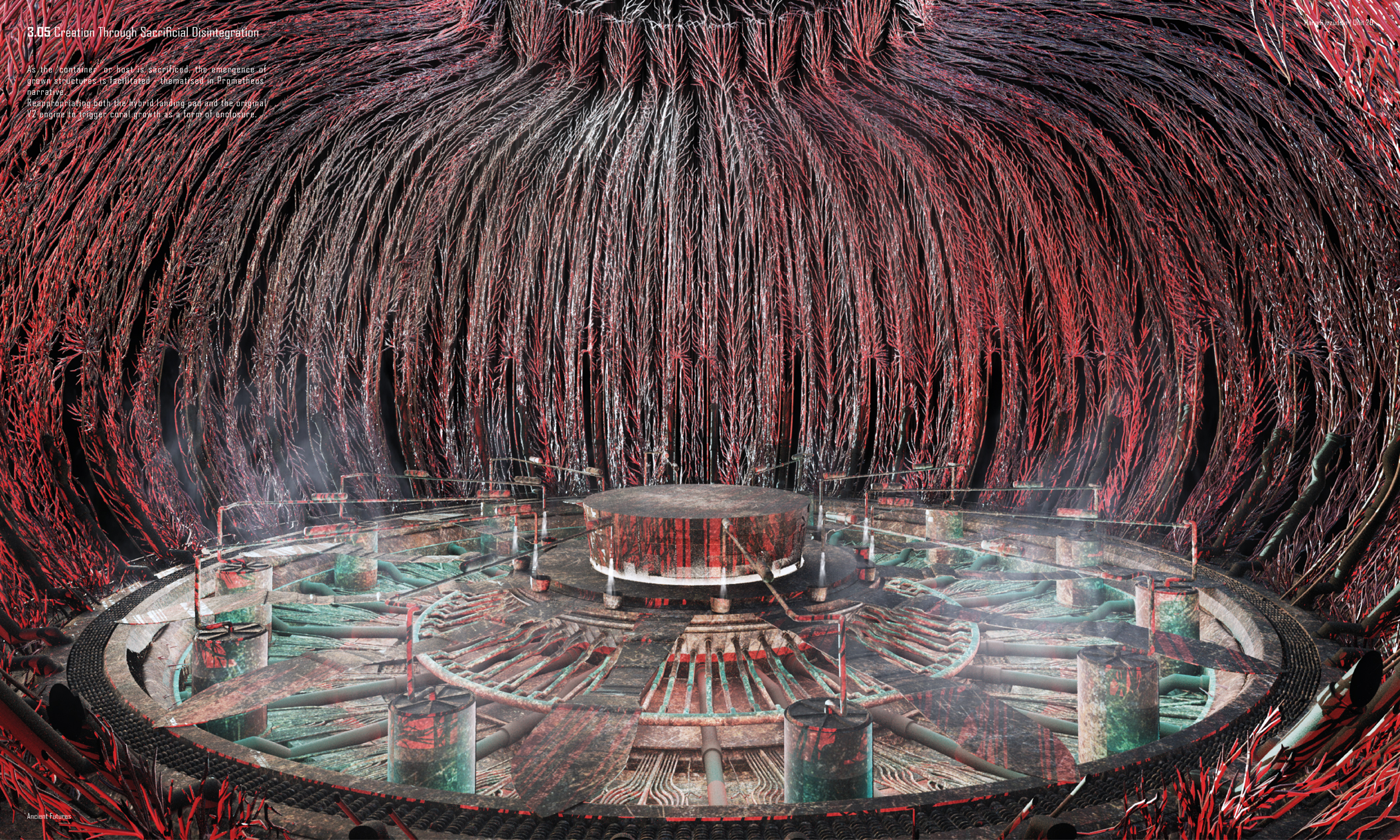
In the next chapter of our brief, I looked at Ridley Scott’s ‘Prometheus’ due to its thematization of the transformation of space through electrical means, relating to Biorock technology which activates a hybrid biomechanical condition through its electrification. Here I began to understand the component parts of the orrery’s biomechanical space, resulting in my own 1:1 interpretation of the Orrery that explores the electrified activation of assembled spatial realms. In keeping with the theme of hybridisation, I reconfigure the assembled logic from my previous hybrid landing pad into a hammam. The Orrery's characteristic roof lantern and rotund shape alludes to the typical geometry of a hammam, which aligns with the central theme of water throughout my project. The calcium carbonate coating that is generated through accretion becomes the connection point between the grown and the assembled worlds.
Click to explore images:




No items found.